EN
EN



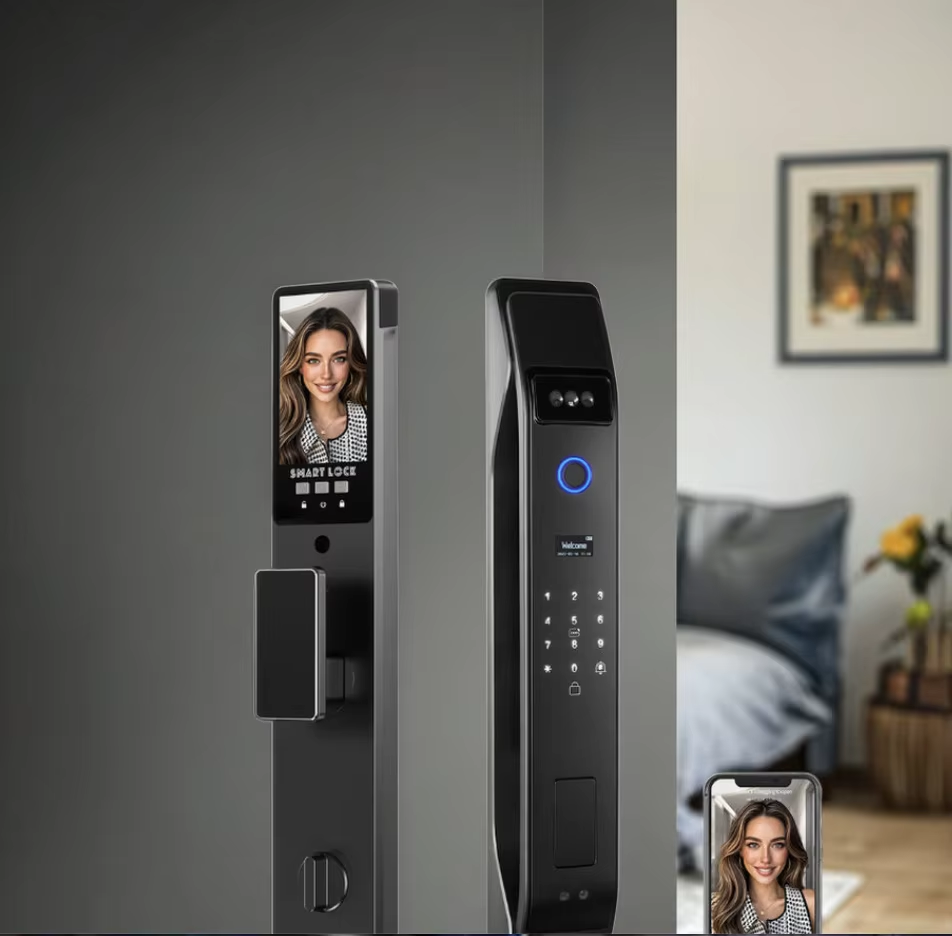
This past decade has witnessed a significant change in home security, and it is no longer what we can call a mechanical key era. Smart and connected systems have evolved into intelligent and responsive solutions that protect homes and businesses. Among the most popular and debated security solutions in this revolution is the WiFi digital door lock. However, the question still remains and confuses homeowners, property managers, and businesses whether a WiFi digital door lock is really a safer option than a traditional lock.
In order to find the answer, one cannot just accept the marketing taglines of such products. It is necessary to analyze the operating principles of both systems and find out the strengths of each. Moreover, modern technology, if designed correctly, can be a great security ally. Smart access solution companies like Shanghai Yuexuntong have not only helped to improve the level of this technology but have also made it more feasible for everyday use.
Traditional Locks: Dependable but Inefficient
Traditional mechanical locks have been the main house security feature for centuries. Their simplicity is what draws people: a physical key activates a mechanical mechanism that either grants or denies access. You can purchase top-notch deadbolts that will be very strong and durable. Moreover, they do not depend on electricity, networks, or software updates to function.
Nevertheless, traditional locks come with their share of drawbacks. Keys can be lost, duplicated at someone else’s convenience, or stolen.Lock picking, bumping, as well as forced entry are still the major threats, especially where old and cheap locks are used. Furthermore, mechanical locks don’t provide any proof of who opened the door and when, so it is impossible to know if someone entered without your permission.
In a world where everything is so fast and interconnected, such lack of control and transparency is one of the biggest flaws of traditional locks.
What Is a WiFi Digital Door Lock?
A WiFi digital door lock is a device that replaces a traditional lock or adds an extra layer of security to it by including electronics that are connected to the local network in a house or office. Besides a physical key, you can use a mobile app, fingerprint scan, create a secret code via keypad, use an RFID card, or issue a temporary digital key for access.
Thanks to the WiFi connection, it is possible to control the door from a distance as well as to open it. This presents a significant difference not only with regular locks but also with smart locks that only use the Bluetooth protocol.
Smart lock producers such as Shanghai Yuexuntong pay much attention to security and user convenience, which results in a balanced combination of hardware and encrypted digital control for their products.
Security Advantages of a WiFi Digital Door Lock
One of the strongest arguments in favor of a WiFi digital door lock is control. Unlike traditional locks, digital locks allow you to decide exactly who can enter and when.
Remote access management means you can lock or unlock your door from anywhere. If you leave and realize you forgot to lock the door, a quick phone tap will solve that problem. There is no need to change the lock when an employee leaves the company or a key is lost. The access can be revoked immediately.
Also, knowing what has happened in your absence is a big plus. Various WiFi locks will send you detailed reports and even pictures of entries to your account. Knowing who used the door and when is very helpful in many situations.
The physical security level of the high-end WiFi digital door locks is ensured by the sturdy materials they are made of, anti-tamper alarms, and automatic lock features. When there is a break-in attempt, the system can send you an alert on your smartphone, thus you will be able to act immediately.
Addressing Common Concerns About Hacking
It is often asked: “Can hackers get into my WiFi digital door lock?” The question is reasonable, but it is equally important to realize that not all products are the same, and that there is a big difference between good and bad design.
Shanghai Yuexuntong and other respectable brands utilize an array of advanced security measures such as the latest encryption standards, secure identification processes, and firmware updates that are constantly being improved, to ensure that their products are not compromised. In fact, these digitally encrypted entrances may hardly be exploited even with ket-lock tools.
Moreover, these locks are made with safe-fail mechanisms. If the WiFi goes down, you can still unlock the door using the local session by fingerprint, PIN, or the backup mechanical key. This dual-mode operation guarantees that your basic security is not compromised when connectivity fails.
Convenience as a Security Feature
Convenience is often overlooked as a component of security. When a lock is easier to use correctly, people are more likely to keep doors secured.
A smart lock will help you in eliminating the mistakes related to the access. Features such as the auto-lock function, granting scheduled access, and a provision of the temporary digital keys to the visitors will certainly minimize the chances for any security breach due to a human factor. In this way, you can avoid the main cause of the spate of home break-ins—storing a spare key in a nearby outdoor location—simply by issuing a one-time code to a trusted visitor or service provider instead.
Such a combination of user-friendliness and strict control can explain the growing popularity of smart lockers in the residential and commercial sectors of today’s world.
Comparing Long-Term Safety
If you keep a traditional lock long enough, it will bring no improvement in your security since it will stay the same and eventually be outdated. However, WiFi digital door locks can upgrade their security by software updates, adding new layers of encryption, and developing new features.
Thus, a correctly supported electronic lock may, in fact, provide a better level of protection in the future when the technology keeps moving up. Combined with good security practices (strong passwords, secure WiFi networks, and regular updates), the potential for long-term safety is enormous.
Final Verdict: Is It Safer?
So, is a WiFi digital door lock safer than a traditional lock? The answer is yes—when it is well-designed, properly installed, and responsibly used.
Traditional mechanical locks still have their merit when it comes to meeting the most basic security needs. Nevertheless, there is a whole world of modern technology, protection, and flexibility to which they are not connected. A WiFi digital door lock presents multi-layer security: robust physical defense, digital encryption, constant real-time check, and control from a distance. This combination is irresistible for homeowners, property managers, and businesses looking for trustable security solutions.
Shanghai Yuexuntong and other prestigious brands make WiFi digital door locks not only secure and reliable but also very user-friendly. Hence, the doors with WiFi locks will no longer be the wonder of some highly technological avant-garde; they will become an ordinary, down-to-earth solution that will take the buzz out of the question how to protect the property effectively.
The future of our homes and workplaces lies in smart technologies, and so does the future of protecting those places. A WiFi digital door lock is not only a lock that is different, but it is also a new attitude toward safety, control, and, ultimately, peace of mind.